
Art and Design

Studying Art
You’ll find art everywhere as you walk around SGS. Many of our pupils’ artwork is displayed in corridors and offices which helps to liven up the spaces, and our artists regularly help create set pieces for shows and performances. Not only this, but every year the art department runs an art exhibition for Year 5 pupils from local Primary Schools. The aim of the department is to sustain a lively and creative working environment where high standards are fostered and maintained, and pupils are encouraged to recognise the subject as part of a living tradition.
Stockport Grammar School has been awarded a Platinum Artsmark Award, the highest possible grading, by the Arts Council England.
Facilities and Staff
The department is housed in its own building. There are four studios and a further resource area with a large collection of textbooks, fabric, and specialist art materials located on the top floor. A range of disciplines are taught including drawing and painting, print, ceramics, graphics and 3D.
An important component of the subject is that ideas flow between the various disciplines and this forms an integral approach to the teaching practised in the department. We encourage pupils from all year groups to actively engage with the subject and work completed by pupils is displayed all around the school site.
Click here to find out more about the staff in the department.
What is Art in the Lower School like?
Art and Design is taught to all pupils in the First and Second Year. At the start of the Autumn term pupils are introduced to a basic Art knowledge by exploring themes including line, shape, tone, form, colour, texture, pattern, composition etc. This ensures the development of skills in a wide range of media and, combined with an introduction to the work of other artists and designers, aims to engage and encourage understanding and ability in the subject. Projects are designed to foster an appreciation and understanding of cross-curricular and cultural issues.

The Second Year sets out to develop skills introduced in the First Year. Projects continue to have drawing at their core and a wider understanding of the History of Art is encouraged through further contextual study. Themes explored include letterform, the portrait and movement.
As skills develop, so more in-depth study is encouraged. Midway through the Second Year, pupils choose whether they wish to continue studying the subject into the Third Year. At this stage the course builds on the foundation skills laid in the first two years and begins to explore a wider range of media and techniques in more depth. Projects may follow a pattern of study similar to GCSE and more complexity is evident in the development of ideas through a range of taught processes.
The Third Year allows pupils to consolidate and explore again the formal elements, and to underline the nature of the design process from an initial idea, through development, to realisation. More complex themes, such as perspective, structure and microscopic imagery are explored in both 2D and 3D formats. The end of year theory exam tests the skills and understanding of areas taught throughout the Lower School. The Third Year course forms an excellent basis for those who wish to pursue the subject at GCSE level and beyond.
Art further up the school
GCSE
GCSE Art and Design is a popular choice. The department follows the AQA specification that allows project based individual programmes of study that are marked internally and moderated externally.
At the start of the Fourth Year, and until the end of the Autumn term in the Fifth Year, pupils complete a portfolio of work (unit one), which accounts for 60% of the total marks.

A further externally set ask (unit two) which includes a timed examination, is completed at the end of the Fifth Year and makes up the remaining 40% of the total marks. The course encourages candidates to develop their technical skills and a wide range of media is explored.
In addition, pupils are encouraged to visit galleries and museums.
A-level
At Advanced Level we offer two endorsements: Art, Craft and Design, and Textiles Design. In each case, the specification provides opportunities for exploration and investigation of the subject. Techniques and principles established at GCSE are revisited and a wider range of media introduced. For pupils intending to pursue a course linked to Art and Design at university, it may be possible to study both endorsements.
A-level sets usually consists of between 6 and 10 pupils and teaching is divided between two members of staff. We follow the AQA specification that provides pupils with the opportunity to explore the full range of possibilities the subject offers them, and to respond in a personal manner.

At the start of the course a number of drawing days are conducted at sites away from the school studios. Visits to galleries are made periodically and pupils are encouraged to make full use of both local and national gallery collections. In addition, a residential trip, either in the UK or abroad, may be offered towards the end of the Lower Sixth year. During the Autumn term, all A-level pupils are given the opportunity of benefiting from a series of life-drawing classes that help to broaden their portfolio and develop their technical drawing skills.
The department has enjoyed an enviable reputation when entering work for selection in both local and national exhibitions. There is great benefit to be had in seeing pupils’ work in a formal gallery environment and a number of opportunities exist for this to take place throughout the year.
While many of our pupils go on to study Art and Design, Art History, or Architecture at university, it is by no means the case that only pupils intending to follow this path should consider the A-level course; pupils choosing it have progressed on to study a wide range of subjects at university having taken Art and Design at A-level.
Please consult the Sixth Form Handbook (pdf) for further information
Download the 2023 A-level and GCSE catalogue
Gallery visits and trips
It is important that pupils are aware of Art and Design in broad terms, and an understanding of the historical and contextual relevance of the subject forms a major part of the department’s teaching.

From time to time it may be appropriate for groups to visit exhibitions in local galleries and museums in order to experience ‘live’ work.

Similarly, if a project demands it, pupils may find that they are taken outside the School grounds to draw and collect source material. The department regularly visits galleries in Manchester, Liverpool and London and, in recent years, groups of pupils have had the opportunity to visit New York, Washington, Paris, Amsterdam, Berlin and Barcelona, or to take part in an art residential on Anglesey.
Clubs and activities
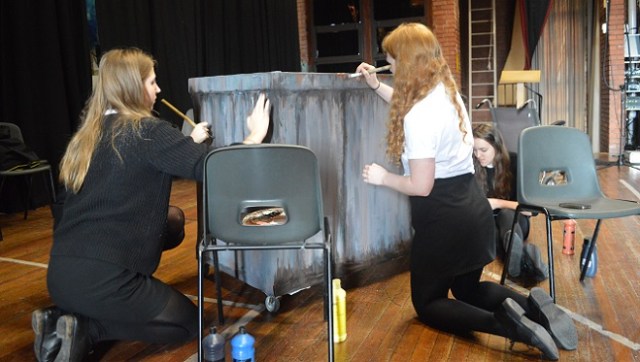
The department runs a dedicated Art Club on one day each week. Here, pupils from across the year groups can work on projects linked to their classwork, or on more specialist pieces that may introduce them to skills including batik, stained glass and ceramics. One area of work undertaken involves the making of backdrops and props for use in the various school productions that take place throughout the year, and this is a splendid way for pupils to get involved in the backstage aspects of these major productions. Pupils may also enjoy the weekly Knitting Club (all years) or the Third Year Textiles Club.
Competitions
The department is keen to explore the possibilities of displaying work outside the school and, to this end, submits work in a number of local and national competitions.
In recent years pupils have been shortlisted in the Royal Academy Young Artists Summer Show, the Saatchi Gallery Schools’ Art prize and the Living Edge magazine annual schools art competition.
In the news
- Pupils deepen subject understanding in southern Spain
- SGS Year 5 Exhibition showcases amazing artwork
- Stockport and Leeds offer up precious source material for artists
- Creativity of artists celebrated in annual catalogue
- Spanish trip inspires Religious Studies and Art students
- Return of exhibition delights audience and artists
- Artists venture out to work on their portfolios
- Year 5 artists wow with self-portraits
- Trips and projects inspire artistic creativity
- Catalogue showcases stunning creativity of artists
- SGS Art Competition celebrates young artists’ creativity
- Art Competition for Year Five children
- Imaginative artists create lockdown masterpieces
- A-level Drawing Research Day 2020
- Catalogue showcases wonderful work of artists
- Art Competition showcases young artists’ creativity